
Decoding 500 kVA Generator Fuel Consumption: Your Ultimate Guide
Let's be honest, when you're responsible for keeping a large facility, a construction site, or a critical data center running, the last thing you want to worry about is a power outage. That's where the mighty 500 kVA generator comes in. It's a true workhorse, a reliable source of significant power when the grid lets you down. But with great power comes, well, a great fuel bill. Understanding the specifics of 500 kVA generator fuel consumption isn't just an academic exercise; it's a critical component of budgeting, operational planning, and ensuring your backup power is both reliable and cost-effective. Have you ever looked at your fuel expenses and wondered where it all goes? You're not alone.
Frankly speaking, many people buy a generator based on its maximum output, but they rarely consider the nuances of its fuel appetite. This guide will demystify the numbers, explore the crucial factors that make your generator thirstier than it needs to be, and provide actionable strategies to keep its consumption in check. Let's dive in.
Understanding the Basics: What Really Drives Fuel Consumption?
Before we can talk numbers, we need to get a handle on some basic concepts. You see "500 kVA" on the side of the machine, but what does that actually mean for fuel usage? It's not as simple as "bigger number, more fuel."
kVA vs. kW: The Power Factor Puzzle
The "kVA" stands for Kilovolt-Ampere, which represents the generator's apparent power. Think of this as the total power the generator is capable of producing. However, the power that actually does useful work—running your lights, motors, and computers—is called real power, measured in Kilowatts (kW). The relationship between these two is defined by the Power Factor (PF).
In an ideal world, kVA would equal kW (a PF of 1.0). In reality, most electrical systems have a power factor less than 1, typically around 0.8. So, for a 500 kVA generator:
- Real Power (kW) = Apparent Power (kVA) x Power Factor (PF)
- 500 kVA x 0.8 PF = 400 kW
This is a crucial distinction. Your generator's fuel consumption is directly tied to the actual load in kW it's supporting, not its maximum kVA rating. A generator running at 50% load is producing 200 kW of power, and its fuel consumption will reflect that, not its 500 kVA capacity.
The All-Important Load Factor
This brings us to the single most important concept: the load factor, or load percentage. A 500 kVA generator will consume a vastly different amount of fuel running a few office lights (a very low load) compared to powering heavy industrial machinery (a high load). Generator manufacturers provide fuel consumption data at specific load points, typically 25%, 50%, 75%, and 100%. It's worth noting that the relationship isn't linear. A generator is not twice as efficient at 50% load as it is at 25% load. Every engine has a "sweet spot," an efficiency peak, usually around 70-80% of its maximum load.
The Numbers Game: How Much Fuel Does a 500 kVA Generator Actually Use?
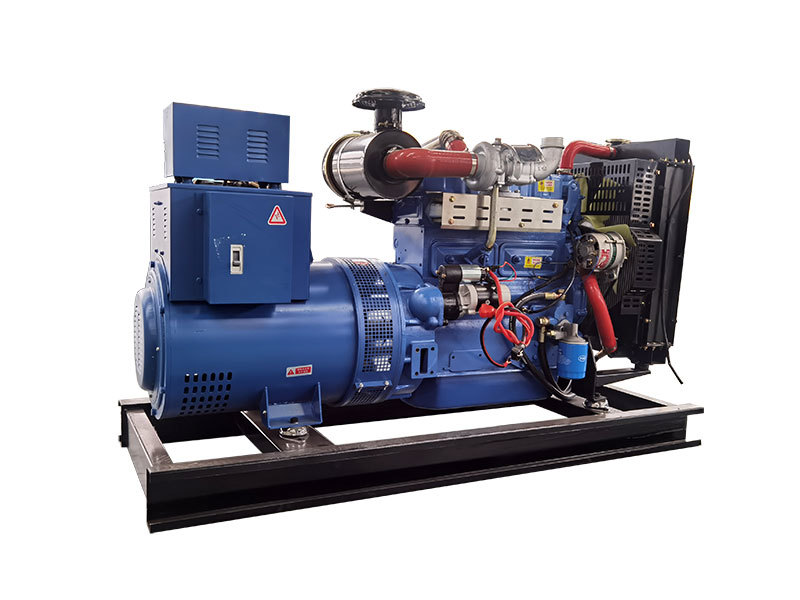
Alright, let's get down to the brass tacks. While the exact numbers can vary slightly between manufacturers like Cummins, Perkins, or Caterpillar, the figures for a modern 500 kVA (400 kW) diesel generator are generally in the same ballpark. Below is a typical consumption chart that I've found to be a reliable starting point in my experience.
Typical 500 kVA Generator Fuel Consumption Rates:
- At 25% Load (100 kW): Approximately 30-35 Litres per Hour
- At 50% Load (200 kW): Approximately 55-65 Litres per Hour
- At 75% Load (300 kW): Approximately 80-90 Litres per Hour
- At 100% Load (400 kW): Approximately 110-120 Litres per Hour
As you can see, doubling the load from 50% to 100% doesn't double the fuel consumption. The engine becomes more efficient as it works harder, up to its rated capacity. This data is the foundation for anyone looking to understand and predict their operational costs.
A Practical Example: How to Calculate 500 kVA Generator Fuel Consumption
Let's put this into a real-world scenario. Imagine you run a manufacturing plant that requires a 500 kVA generator during an 8-hour power outage. Your average load during this period is consistently around 300 kW, which is 75% of the generator's 400 kW real power capacity.
- Identify the Load: 75%
- Find the Consumption Rate: From our chart, the rate at 75% load is about 85 litres per hour.
- Calculate Total Consumption: 85 Litres/Hour x 8 Hours = 680 Litres.
With this simple calculation, you know you'll need approximately 680 litres of diesel to get through a full workday. This allows you to plan fuel storage, schedule refueling, and accurately budget for emergency power situations. It's a simple but powerful piece of knowledge.
Key Factors That Influence Your Generator's Fuel Efficiency
The manufacturer's chart provides a perfect-world baseline. However, in the real world, several factors can push your generator's fuel consumption up or down. Ignoring these is like trying to drive economically with a lead foot and flat tires. Many experts agree that focusing on these variables is where the real savings are found.
Load Percentage: The Biggest Culprit
We've touched on this, but it deserves emphasis. Consistently running a large generator at a very low load (below 30%) is one of the worst things you can do. Not only is it incredibly inefficient in terms of fuel burned per kilowatt produced, but it can also cause long-term engine damage. This condition, known as "wet stacking," occurs when unburned fuel and carbon build up in the exhaust system, leading to reduced performance and costly repairs down the line.
Engine Maintenance and Health
A generator is an engine, and like any engine, it needs regular care to perform optimally. A poorly maintained generator is a thirsty generator.
- Clean Filters: Clogged air filters restrict airflow, forcing the engine to work harder and burn more fuel to achieve the same output. Similarly, dirty fuel filters can impede fuel flow and harm injector performance. - Oil Viscosity: Using the correct grade of engine oil reduces internal friction, allowing the engine to run more smoothly and efficiently. - Injector Health: Faulty or dirty fuel injectors can result in poor fuel atomization, leading to incomplete combustion and wasted fuel.
Ambient Conditions and Fuel Quality
The environment plays a bigger role than you might think. Extreme temperatures, both hot and cold, can affect engine efficiency. High altitude, where the air is thinner, can reduce engine output and impact the air-fuel mixture, often increasing consumption. Furthermore, the quality of your diesel fuel is paramount. Clean, high-quality fuel ensures complete and efficient combustion. Contaminated or low-grade fuel can lead to poor performance and, you guessed it, higher fuel usage.
Pro Tips for Optimizing Fuel Consumption and Reducing Costs
Knowing the "why" is great, but how can you actively reduce your 500 kVA generator fuel consumption? Here are some practical strategies you can implement.
Right-Sizing Your Generator
The most effective strategy begins before you even install the unit. Conduct a thorough load analysis of your facility. If your average load is only 150 kW, a 500 kVA generator is oversized and will spend its life running inefficiently. It might be more cost-effective to use a smaller generator or even two smaller units in parallel that can be activated as load increases. Proper sizing ensures the generator operates closer to its peak efficiency curve.
Smart Load Management
Instead of letting all your equipment turn on at once, creating a massive initial load, try to manage it. Stagger the startup of heavy machinery. If possible, schedule non-essential high-power tasks to run during off-peak hours. The goal is to maintain a stable, predictable load that keeps the generator operating in that sweet 70-80% range as much as possible. This is one of the most impactful factors affecting generator fuel efficiency.
Embrace Regular Monitoring
You can't manage what you don't measure. Modern generator controllers and remote monitoring systems can provide a wealth of data on load levels, run times, and fuel usage. By tracking this data, you can spot trends, identify periods of inefficiency, and see the real-world impact of your optimization efforts. A sudden spike in fuel consumption could be the first sign of a maintenance issue that needs attention.
Final Thoughts on Managing Your 500 kVA Generator's Thirst
A 500 kVA generator is a vital asset for any operation that can't afford downtime. While its fuel consumption is a significant operational expense, it is not an uncontrollable one. By moving beyond the simple sticker price and understanding the interplay between load, maintenance, and operational practices, you can take firm control of your power generation costs.
Ultimately, managing your 500 kVA generator fuel consumption is about being proactive. It's about choosing the right machine, running it intelligently, and maintaining it diligently. By doing so, you ensure that when you need it most, your generator will be ready to perform not just reliably, but also as efficiently and economically as possible. What's the biggest challenge you face in managing your generator's fuel costs?
For more detailed information, please visit our official website:500 kva generator fuel consumption
About the author: David Chen is a Power Generation Specialist with over 15 years of hands-on experience in the industrial and commercial generator industry. He specializes in optimizing generator performance, conducting load analysis, and developing cost-effective power management strategies for large-scale facilities. David is passionate about helping businesses enhance their energy resilience while minimizing operational expenses and environmental impact. He frequently contributes to industry publications, sharing his practical insights on power system efficiency.