
Mastering Uptime: The Engineer\'s Generator Set Monitoring Checklist 2025
As the lead engineer of a company dedicated to power generation technology, I spend my days analyzing failure points and architecting resilience. For procurement leaders and facility managers, the conversation around generator sets has fundamentally shifted. It's no longer about the raw power output alone; it's about intelligent, predictive, and uninterrupted power delivery. This is precisely why a robust generator set remote monitoring and diagnostics features checklist 2025 is not just a technical document—it's your primary defense against operational catastrophe. We've seen firsthand how a lack of deep system visibility leads to silent failures that cascade into millions of dollars in losses. Our entire engineering and manufacturing philosophy is built to prevent that from ever happening to you.
The New Imperative for Uptime: Why Your 2025 Strategy Needs Remote Intelligence
The modern operational landscape, whether in a data center, a hospital, or a remote industrial site, has zero tolerance for downtime. Yet, traditional generator set maintenance is often reactive. A technician arrives after a fault has occurred, or performs routine checks that might miss developing issues. We frequently encounter clients who have suffered from preventable failures: a slow coolant leak that went unnoticed, a degrading battery that failed during a critical startup sequence, or fuel contamination that crippled an engine. These aren't sudden, unpredictable events; they are the result of data that was never collected or analyzed.
This is where the paradigm shifts. A modern monitoring system isn't a simple alarm panel. It's a comprehensive diagnostic hub that lives in the cloud, constantly tracking hundreds of parameters. Our systems are designed to identify the subtle precursors to failure. For instance, we don't just monitor battery voltage; we track cranking amperage over time, charging cycles, and ambient temperature to predict the end of its reliable life months in advance. We trace fuel level anomalies not just to signal a refill, but to flag potential theft or leaks by correlating consumption rates against engine load history. Are your current systems merely reporting failures, or are they actively preventing them?
The value is in moving from a reactive to a predictive stance. This transition is the core purpose of a meticulously crafted generator set remote monitoring and diagnostics features checklist 2025. It allows you to evaluate potential suppliers not on what they promise, but on the depth of the data they can provide and the actionable intelligence they can derive from it. It's about ensuring your backup power is not just present, but proven to be ready at all times.
Engineered for Insight: The Design Philosophy Behind Our Monitoring Systems
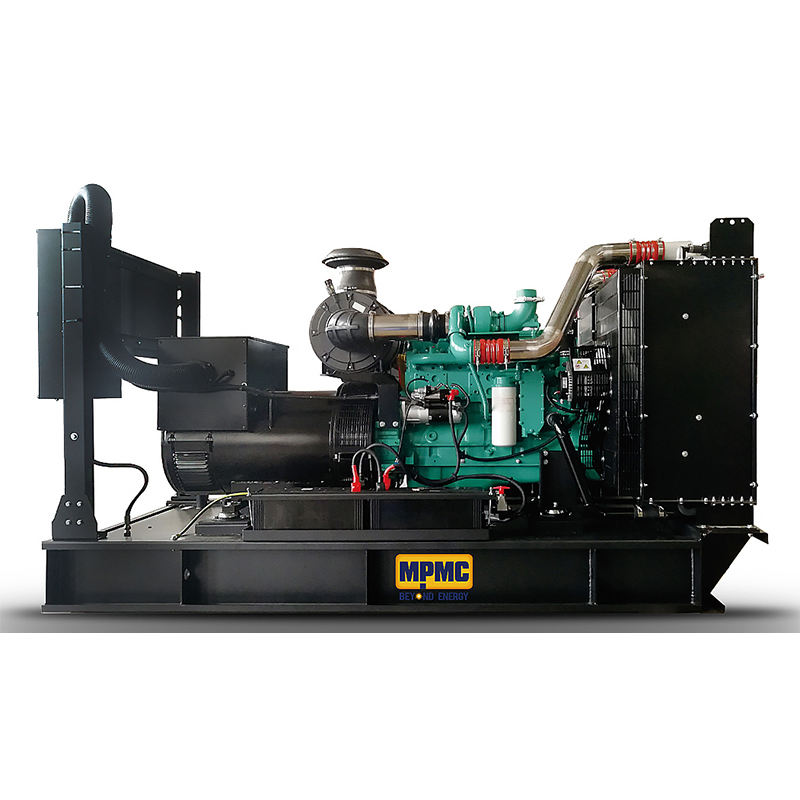
True reliability isn't a feature you add on; it's engineered from the ground up. Our approach to remote monitoring begins with the physical hardware and its deep integration with the generator set's core components. We believe that the quality of the data is paramount, and that starts with the sensors and control modules themselves.
Our engineering team obsesses over material science and component durability. The control module enclosures are not off-the-shelf plastic; they are fabricated from high-tensile steel with IP67 ratings, ensuring they withstand the vibration, temperature extremes, and moisture inherent in an engine compartment. Internally, we utilize automotive-grade electronics rated for continuous operation from -40°C to 85°C. This isn't an over-specification; it's a necessity born from analyzing field returns from less robust systems.
We quantify our commitment to precision. For instance, our vibration sensors are calibrated to detect bearing wear signatures and imbalances long before they become audible or catastrophic. Furthermore, our control modules undergo 2,000 hours of continuous operation testing in environmental chambers, cycling through temperature and humidity extremes to expose any potential weaknesses. This rigorous validation process is how we ensure our hardware won't be the point of failure when you need it most. We also achieve 0.01 mm concentricity control on critical rotating components within the generator itself, a tolerance that reduces vibration and extends the life of the very systems we monitor.
Data integration is another cornerstone. We don't rely on analog signal converters that can introduce noise and inaccuracy. Our systems communicate directly with the engine control unit (ECU) via native CAN bus integration. This provides a clean, digital stream of over 200 parameters, from oil pressure and coolant temperature to specific engine fault codes. Our proprietary signal processing algorithms filter out environmental noise, ensuring 99.9% data accuracy for critical alerts. This engineering depth is what transforms raw data into trustworthy, preventative intelligence.
From Data Centers to Remote Sites: Real-World Application Scenarios
Theory and specifications are important, but the true test of any system is its performance in the field. Our remote monitoring and diagnostics solutions have been deployed across a wide spectrum of industries, each with unique challenges and demands.
Consider the critical environment of data center backup power. A major cloud services provider approached us after experiencing a near-miss where one of their backup generators failed to start during a utility brownout. The cause was a faulty block heater that had gone undetected. We retrofitted their entire fleet of 20 generators with our monitoring system. Within six months, the system flagged two separate issues proactively: a predictive alert on a failing starter battery in one unit and an abnormal coolant temperature trend in another, which we traced to a developing water pump issue. By enabling preventative maintenance, we helped them avert two potential outages, preserving their service level agreements (SLAs) and saving them from what their internal analysis estimated would have been over $1.5 million in potential damages and customer rebates.
On the other end of the spectrum, a telecom company managing hundreds of remote cell towers in rugged terrain faced immense logistical costs. Technicians were driving for hours simply to check fuel levels and perform visual inspections. This was a perfect application for a long-tail strategy focused on using a preventative maintenance with a generator set remote monitoring and diagnostics features checklist 2025 to slash operational expenses. We deployed our solution with integrated fuel level sensors and geofencing. The results were transformative. The company was able to optimize refueling routes, reducing fuel delivery costs by 35%. More importantly, remote diagnostics allowed them to dispatch technicians only when necessary and armed with the correct parts, reducing site visits by over 60% and dramatically improving network uptime.
The Manufacturing Backbone for Your Generator Set Remote Monitoring and Diagnostics Features Checklist 2025
An advanced design is only as good as the manufacturing process that produces it. At our facility, we have built a quality-first culture supported by data and automation. We don't just build products; we build a verifiable record of quality for every single unit that leaves our doors. This manufacturing integrity is a critical, though often overlooked, item on any comprehensive generator set remote monitoring and diagnostics features checklist 2025.
Our production lines are designed for scalability and precision. For the electronics at the heart of our monitoring systems, every printed circuit board (PCB) undergoes Automated Optical Inspection (AOI) to catch microscopic soldering flaws that a human eye would miss. Each key component, from the processor to the communication module, is assigned a unique serial number, creating a digital thread. This allows for complete traceability—if a component from a specific batch ever shows a higher-than-normal failure rate in the field, we can proactively identify every unit it was installed in.
Before a generator set is cleared for shipment, it undergoes a rigorous, multi-stage testing protocol. This isn't a simple spot check. Every unit is connected to a load bank and run through a simulated power outage scenario, testing its response time, stability under full load, and the accuracy of every sensor. The data from this final validation test is logged and permanently associated with the unit's serial number. This data-driven approach to quality control ensures that the product you receive performs exactly as designed, every time.
A Partnership in Power: Service, Customization, and Global Logistics
We view every client relationship as a long-term engineering partnership. Your operational needs are unique, and a one-size-fits-all solution is rarely the optimal one. Our process begins not with a sales pitch, but with a technical consultation led by our application engineers. We work with your team to understand your specific challenges, existing infrastructure, and desired outcomes.
This collaborative spirit extends to customization. Whether you need to integrate our monitoring data into your existing Building Management System (BMS) via Modbus or SNMP, require custom alert thresholds for specific equipment, or need a white-labeled user interface for your service teams, we have the engineering agility to accommodate. We manage a tiered approach to lead times, providing clear timelines for standard configurations, customized samples, and full production runs. Our goal is to provide transparency and predictability for your procurement and project planning.
Our support extends globally. We have extensive experience navigating international logistics, ensuring that our generator sets and monitoring systems are packaged securely and arrive with all necessary documentation for smooth customs clearance and installation. Our technical coordination team acts as a single point of contact for your project managers, streamlining communication from the initial design review through to final delivery and commissioning support.
Your Actionable Path to Predictive Uptime: The Ultimate Checklist & Our Commitment
To empower your decision-making process, we've distilled our engineering experience into a core checklist. When evaluating any solution, ensure it meets these critical benchmarks. This is the foundation of a modern, resilient power strategy.
- Comprehensive Real-Time Data: Does the system monitor more than just basics? Look for engine RPM, oil pressure, coolant temperature, load (kW, kVA), voltage, current, and frequency for all phases.
- Predictive and Diagnostic Analytics: Does it offer trend analysis for battery health, fuel consumption patterns, and engine runtime to predict maintenance needs before a fault occurs?
- Customizable, Multi-Channel Alerts: Can you configure specific alert conditions and receive notifications via SMS, email, and a dedicated mobile application?
- Secure and Accessible Data History: Is all data logged securely in the cloud with an easily searchable history for performance review and root cause analysis?
- Robust Integration Capabilities: Does it support industry-standard protocols like Modbus, SNMP, and direct CAN bus communication for seamless integration with other systems?
- Hardware Durability and Certification: Is the physical hardware rated for the harsh environment of a generator enclosure (e.g., IP67, wide temperature range)?
Ultimately, selecting the right partner is about more than just ticking boxes. It's about choosing a team whose engineering philosophy aligns with your need for absolute reliability. The principles outlined in this generator set remote monitoring and diagnostics features checklist 2025 are not just a guide; they are a direct reflection of our daily commitment to our clients. We build every system with the understanding that your business, your safety, and your reputation depend on it.
Let's start a technical conversation about how our engineering expertise and manufacturing discipline can safeguard your critical power infrastructure for 2025 and beyond.
For more detailed information, please visit our official website:generator set monitoring
About the author: As the Technical Director with over two decades of experience in power generation systems and industrial automation, I lead our engineering teams in designing and manufacturing the industry's most reliable generator sets and control systems. My focus is on integrating advanced diagnostics and predictive analytics to transform backup power from a reactive necessity into a proactive, intelligent asset. I am passionate about solving complex power challenges and helping clients achieve unparalleled operational uptime and peace of mind. ---